



-
 Written By:
Alex Herrera
Written By:
Alex Herrera
-
Edited By:
Phyllis Rodriguez, PMHNP-BC
-
Clinically Reviewed By:
Dr. Ash Bhatt, MD, MRO
 Written By:
 Edited By:
 Clinically Reviewed By:
Research note: This article is for general education and does not replace medical advice.
Searching for drug rehabs in Columbus can feel like a decision that must be made quickly, and sometimes it is. The right program is not necessarily the closest listing or the one with the most polished website. It is the setting that can safely address the substance use, mental health, medical, privacy, and transition needs involved.
For Columbus residents, location also deserves a precise explanation. Legacy Healing Center’s treatment facility is in Cincinnati, not Columbus, but the center serves clients from Columbus and other Ohio communities. Traveling to a nearby city can be a practical option when the program offers the clinical structure and continuity a person needs.
Need help comparing treatment paths? Call Legacy admissions at 513-586-4971 to discuss next steps.
The sections below focus on questions to ask before choosing care. They are not a substitute for an evaluation. A qualified treatment team should match the level of care to the person’s current safety, substance use, medical history, mental health symptoms, support system, and recovery goals.
What Should Columbus Families Compare When Choosing a Rehab?
Begin with clinical fit, not a facility’s distance from home. A useful assessment considers the substance or substances involved, withdrawal history, physical health, mental health symptoms, previous treatment, current living environment, and the support available after formal care. Federal health guidance explains that treatment should match a person’s clinical needs and situation to the appropriate level of care and setting. That principle matters whether someone is considering care in Columbus, Cincinnati, or another Ohio community.
Ask how the program evaluates needs before admission and how often the plan is reviewed. The goal is not to place everyone into the same schedule. Someone who needs medically supervised withdrawal management may require a different entry point than someone who is medically stable and ready for structured outpatient counseling. The plan may also change as withdrawal resolves, symptoms become clearer, or the person demonstrates greater stability.
Questions about clinical care
- Who completes the initial medical, psychiatric, and substance use assessment?
- Is medical coverage available during withdrawal or medication changes?
- How does the team identify co-occurring mental health conditions?
- What happens if the first level of care is not enough or is more intensive than necessary?
- Will clinicians coordinate the next step before discharge?
Dual diagnosis capability is especially important when anxiety, depression, trauma symptoms, mood changes, or other mental health concerns appear alongside substance use. Treating only one concern can leave a person without support for the factors that influence cravings, sleep, decision-making, or relapse risk. Look for a program that can evaluate both conditions and explain how psychiatric care, therapy, medication management, and recovery planning work together.
Questions about daily life and dignity
Families should also compare privacy practices, accommodations, communication policies, transportation expectations, and the level of structure outside therapy sessions. A comfortable setting does not replace clinical quality, but privacy and a predictable routine can make it easier for some people to participate consistently. Ask what personal information is shared, who may receive updates, and how consent is handled.
Finally, consider continuity. A strong plan should explain what happens after detox, residential treatment, or a day program. Legacy Healing Center describes an integrated continuum that can progress from medically supervised detoxification through residential, outpatient, and aftercare services. That approach gives Columbus families a concrete question to ask: can the same team help coordinate the next appropriate step. Or will the family have to start the search again?
How Do Drug Rehabs in Columbus Differ by Level of Care?
The main difference among treatment programs is how much structure, supervision, and daily support they provide. A person may begin with medically supervised detox, continue into residential treatment, and then step down to a partial hospitalization program (PHP) or intensive outpatient program (IOP). That progression is not automatic or identical for everyone. Evidence-based guidelines help clinicians evaluate a person’s needs and match them with an appropriate level of care and setting. The right choice can also change as withdrawal symptoms, mental health needs, and stability change.
Legacy Healing Center provides an integrated continuum from medically supervised detoxification through residential, outpatient, and aftercare services. Its Cincinnati facility serves clients from Columbus, so searching for drug rehabs in Columbus does not require limiting the decision to a facility within city limits. Ask whether a program can coordinate transitions instead of treating each level as a separate episode. For a broader overview, you can learn about detox versus rehab.
| Level of care | Structure | Questions to ask |
|---|---|---|
| Medically supervised detox | Medical oversight and clinical monitoring during withdrawal and early stabilization. Symptoms and treatment needs are assessed individually. | Who provides medical supervision? How are withdrawal symptoms monitored? What happens after stabilization? |
| Residential or inpatient | Live-in care with 24/7 support, treatment planning, and access to integrated mental health services in a stable environment. | Is support available around the clock? How is the plan adjusted? What transition follows residential care? |
| Partial hospitalization program (PHP) | Intensive daytime treatment without overnight residence. PHP can bridge residential care and outpatient treatment. | How many treatment days are typical? What support is available outside program hours? Is transportation or housing addressed? |
| Outpatient or intensive outpatient program (IOP) | Scheduled treatment while the client lives outside the program. The intensity and duration depend on clinical needs and stability. | How often do sessions occur? How are setbacks handled? What continuing care and aftercare support are available? |
Program labels alone do not establish quality or suitability. Ask how the team assesses substance use, withdrawal history, medical concerns, mental health symptoms, living environment, and available support before recommending a setting. No single treatment method fits everyone, and treatment may vary in form, setting, and duration. A clear plan should explain not only where care starts, but also how progress will be reviewed and when a safer, less intensive setting may be appropriate.
When Does Medical Oversight Matter During Treatment?
Medical oversight matters most when stopping alcohol, benzodiazepines, opioids, or multiple substances may produce withdrawal symptoms that change quickly or require close observation. A person cannot reliably predict the severity of withdrawal from past experience alone. Medical history, substances used, mental health symptoms, and previous withdrawal complications can all affect the care plan and the length of detoxification.
At Legacy Healing Center, luxury detox includes 24/7 medical supervision, continuous clinical monitoring, individualized symptom management, and treatment planning. That structure gives clinicians the opportunity to observe changes, respond to emerging symptoms, and adjust the treatment approach based on the person’s condition. It also gives the individual a safer setting for discussing discomfort, anxiety, sleep changes, cravings, or other concerns that may arise during early stabilization.
Medication decisions require a complete assessment
Medication is not selected or dosed from a generic formula. Clinicians need patient body weight when selecting and dosing medication during detox and stabilization, along with other relevant medical information. This is one reason an assessment should take place before medication decisions are made. Do not attempt to copy another person’s medication plan, change a prescribed amount, or use someone else’s medication. A qualified medical team must determine what is appropriate for the individual.
The purpose of supervision is not to promise that withdrawal will feel comfortable or follow a fixed timeline. Legacy describes a typical luxury detox stay as five to ten days, but duration varies according to clinical factors. Ongoing assessment helps the team make decisions as the person’s symptoms, medical history, and response to care become clearer. The appropriate next step may also differ from one person to another.
For people traveling from Columbus, the treatment center is in Cincinnati, rather than Columbus. Location should not be the only measure of clinical fit. Ask whether the program provides continuous medical monitoring, individualized symptom management, and a clear plan for stabilization. You can learn more about medically supervised detox in Ohio and the oversight it includes.
Know when withdrawal needs emergency care
Call 911 or seek emergency care immediately if someone faces immediate danger, severe confusion, a seizure, trouble breathing, or another emergency symptom. Do not leave the person alone while waiting for help, and do not delay emergency evaluation to arrange admission to a treatment program. Once the immediate danger has been addressed, a medical professional can help identify the safest next step for ongoing care.
Why Does Dual Diagnosis Experience Matter for Columbus Clients?
Substance use does not always occur by itself. A person may also be living with depression, anxiety, trauma-related symptoms, or another mental health condition. When both a mental disorder and a substance use disorder are present, clinicians often use the term co-occurring disorders, also called dual diagnosis. The Substance Abuse and Mental Health Services Administration defines a co-occurring disorder as having at least one mental disorder and at least one substance use disorder. SAMHSA explains the definition and treatment principles for co-occurring disorders.
This matters when comparing treatment options from Columbus because care that focuses on substance use alone may not address symptoms that influence distress. Decision-making, sleep, or continued substance use. A thorough evaluation can help the clinical team understand the person’s substance use, mental health history, current symptoms, medical needs, and goals. That information supports a more appropriate plan rather than assuming that one program or therapy fits every client.

Integrated evaluation keeps the full picture in view
Dual diagnosis experience means mental health and substance use concerns are considered together throughout treatment. At Legacy Healing Center, co-occurring mental health conditions and substance use are treated simultaneously across the care continuum. The clinical approach described by Legacy includes psychiatric evaluation and medication management, along with Cognitive Behavioral Therapy, Dialectical Behavior Therapy, trauma-informed care, and motivational interviewing. The specific combination depends on the person’s assessment and clinical needs.
Integrated care does not mean every client receives the same medication or therapy. Medication decisions are medical decisions made by qualified clinicians. When medication is considered during detoxification or stabilization, the care team also needs relevant medical information, including patient body weight, to select and dose medication appropriately. Clients should receive an explanation of the purpose, risks, and expected monitoring for any recommended intervention.
Individualized planning is more meaningful than a promise
SAMHSA advises providers to work with clients on a comprehensive, individualized plan that addresses both disorders. It also identifies a phased approach to treatment as a guiding principle. In practice, that can mean adjusting priorities as safety, withdrawal symptoms, mental health symptoms, and progress change. A plan may also evolve as someone moves between levels of care.
When speaking with a treatment provider, ask how the evaluation addresses both substance use and mental health. Who participates in psychiatric care, how treatment goals are documented, and how the plan can change when new information emerges. Look for clear explanations of evidence-based services and realistic limits. Evidence-based care can provide a structured, clinically informed path, but no provider can guarantee a particular outcome or timeline. For clients traveling from Columbus. Asking these questions before admission can help identify whether a Cincinnati-based program offers the clinical coordination and level of support that matches their needs.
How Can Privacy and Continuity Shape the Treatment Decision?
Privacy is not simply a comfort preference when someone is considering treatment. A setting that feels discreet and respectful can make it easier to focus on assessment, therapy, medical care, and honest conversations about substance use. For professionals, college students, and others balancing public responsibilities, private accommodations may also reduce distractions during an especially vulnerable period.
What does the residential experience include?
Legacy Healing Center is located in Cincinnati, not Columbus, but it serves clients from Columbus and communities throughout Ohio. Its residential program provides live-in care with 24/7 support, integrated mental health treatment, and individual treatment planning. Private accommodations, chef-prepared meals, nutrition support, small client-to-staff ratios, and recovery planning are part of the residential experience. These features do not replace clinical care, but they can provide the structure and stability some people need while they work on recovery.

Readers comparing treatment centers should ask how privacy is protected, who remains available outside scheduled sessions, and whether mental health needs are addressed alongside substance use. You can learn more about inpatient rehab in Ohio and the support a residential setting may provide.
How long should treatment last?
There is no universal treatment timeline. Medical history, substances used, withdrawal complications, mental health symptoms, progress in care, and the person’s support environment can all influence the appropriate duration. A typical Legacy luxury detox stay is five to ten days, while residential stays are commonly 30, 45, or 60 days, with extensions when clinically appropriate. Partial Hospitalization Program participation commonly lasts two to six weeks and provides intensive daytime treatment without overnight residence.
Continuity matters because these stages should connect rather than function as isolated appointments. Legacy’s model spans seven levels of care, from medically supervised detoxification through residential, outpatient, and aftercare services. A clinical team can reassess needs as someone moves into a less intensive setting. Helping the next step reflect current safety, functioning, and support needs instead of an arbitrary calendar date.
Is traveling from Columbus to Cincinnati practical?
Traveling can create distance from familiar triggers and daily pressures while preserving access to care within Ohio. Legacy offers travel assistance from Columbus for clients who need help planning the transition to Cincinnati. Before admission, ask what transportation coordination, arrival planning, and follow-up support are available. The right choice is the setting that aligns with clinical needs, privacy concerns, and a realistic plan for continuing care after the initial treatment phase.
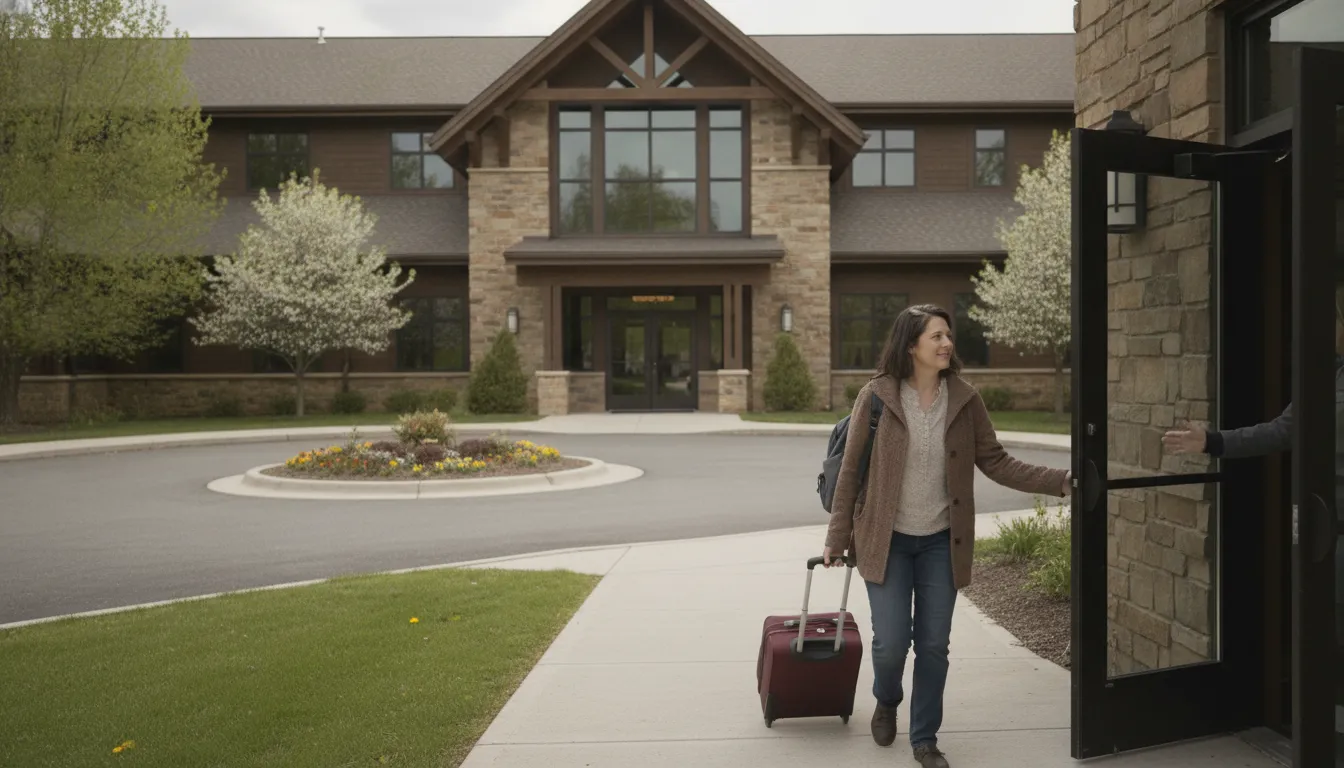
Contact Legacy admissions to discuss treatment options in Cincinnati for clients from Columbus.
Frequently Asked Questions
Does Legacy Healing Center have a drug rehab facility in Columbus?
No. Legacy Healing Center’s primary treatment facility is in Cincinnati, Ohio, and serves clients from Columbus and other Ohio communities. The right comparison is not limited to facilities within city limits. Consider clinical fit, level of care, privacy, and the support available during travel. Legacy also offers travel assistance for treatment from Columbus.
How do I know whether I need detox or residential treatment?
A clinical assessment should guide that decision. Detox focuses on medical stabilization and withdrawal monitoring, while residential treatment provides live-in support and structured therapy after or alongside detox. Legacy describes a continuum that includes medically supervised detox, residential care, outpatient services, and aftercare. Severe confusion, a seizure, trouble breathing, or immediate danger requires 911 or emergency medical care.
How long might treatment last?
There is no universal timeline. At Legacy, a typical luxury detox stay is five to ten days, while residential stays are commonly 30, 45, or 60 days. Duration can change based on substances used, medical history, mental health symptoms, withdrawal history, and clinical progress. Treatment planning should be individualized rather than selected by a fixed number of days. Learn about medically supervised detox in Ohio.
What should I ask about medication during detox?
Ask how clinicians evaluate withdrawal risk, monitor symptoms, and adjust treatment safely. Medication selection and dosing require medical assessment, including the patient’s body weight. Do not rely on someone else’s medication or attempt to plan a dose without medical guidance. Ask whether the program can address substance use and co-occurring mental health needs together.
Contact Us to Compare Treatment Options
Choosing care from Columbus does not require deciding alone or finding a facility within city limits. A conversation with Legacy admissions can help you discuss the available treatment paths. Consider an appropriate level of care, and understand what traveling to the Cincinnati facility may involve.