


-
 Written By:
Alex Herrera
Written By:
Alex Herrera
-
Edited By:
Phyllis Rodriguez, PMHNP-BC
-
Clinically Reviewed By:
Dr. Ash Bhatt, MD, MRO
 Written By:
 Edited By:
 Clinically Reviewed By:
What Are The Top 10 Hidden Triggers That Spark Alcohol Cravings
If you’ve felt a strong urge to drink while watching your friend enjoy a glass of wine, don’t feel guilty. These urges stem from hidden triggers that not only weaken your willpower but also increase the risk of relapse.
Alcohol cravings are hard to manage during your recovery because most of these urges sneak in quietly. Certain places, people, or situations may remind you of past drinking and can trigger cravings without warning. The hidden triggers are not easy to overlook, and understanding them can be the first step toward staying in control, preventing relapse, and maintaining a sustained sober life.
What Are Alcohol Cravings?
Alcohol cravings are overwhelming urges to drink alcohol that occur during or after recovery. When someone quits drinking, it’s normal to feel the desire to use the substance again. Cravings can be thoughts, physical sensations, or feelings that tempt the individual to use alcohol, even when their willpower says ‘no’.
However strong cravings may be, they are short-lived and tend to lose strength over time. According to NIH-backed references, cravings occur because prolonged drinking has already caused changes in brain functioning. With repeated drinking, the brain learns to associate alcohol consumption with relief and relaxation, which can lead to intense cravings even if the individual does not consciously want to drink.
Why Hidden Triggers Are More Dangerous?
Hidden triggers are more dangerous because they are hard to recognize, yet a person feels a strong urge to respond to them. Hidden triggers act as symbolic reminders that provoke intense cravings without obvious warning.
At times, these triggers may seem to appear suddenly, and the individual feels the need to experience the rewarding effects of alcohol. These triggers involve a complex mix of emotional and environmental factors, making them harder to manage effectively.
10 Subtle Triggers That Can Increase the Urge to Drink
An alcohol trigger can be a feeling, a person, a place, or just a moment that tempts the person to start drinking after a time lapse. It creates an uncomfortable pull that they may struggle to resist, especially when they have made up their mind not to drink again.
Stress and Daily Pressure
If you have experienced stressful life events such as the death of a loved one, a financial crisis, or relationship conflicts, you may miss the relaxing effects of past alcohol use. You may crave alcohol and use it to cope with stress. NIH-backed research documented a strong link between stress and alcohol relapse in people recovered from Alcohol Use Disorders.
Emotional States
It’s not just stress, but feelings of sadness, guilt, or anger can increase the urge to drink. If you had used alcohol previously to cope with challenging emotions, you may miss drinking and feel the urge to drink again when feeling low. Even during early recovery, when difficult emotions resurface, your brain recalls past alcohol use as coping patterns and triggers cravings.
Certain People or Social Circles
Being around people who drink regularly, or having been a part of their community previously, can lead to cravings. You may go to such social circles with no intention of drinking, but you may leave your guards down when they tell you that only one drink doesn’t matter. Sometimes, social pressure and the desire to fit in can weaken your willpower, leading to irresistible cravings.
Environmental Cues
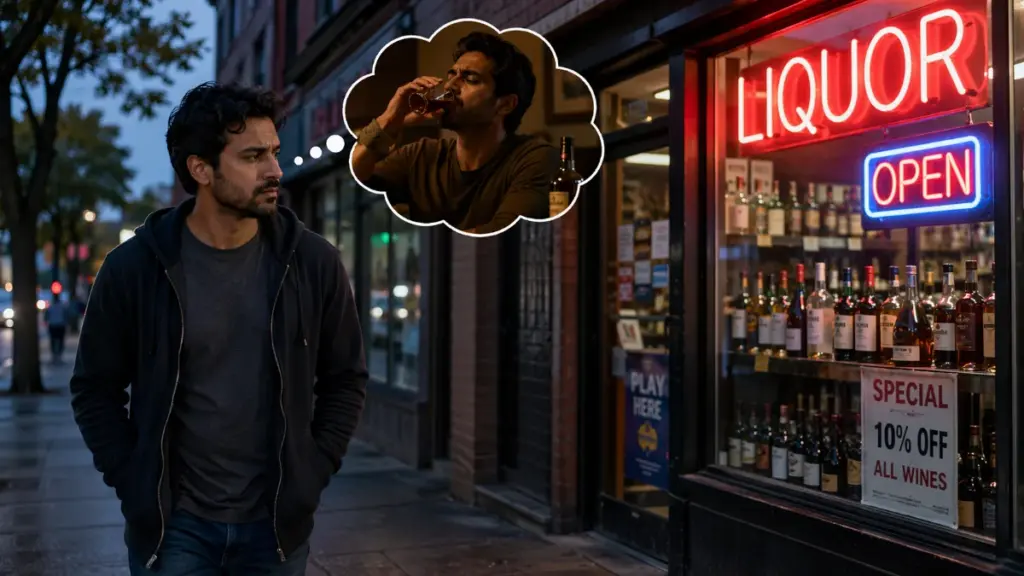
Sometimes your immediate surroundings can act as triggers to alcohol cravings. You may walk past the bar you often visited, or hear a musical note or a song that reminds you of drinking with friends. Your mind replays old patterns and habits that trigger an urge to drink again.
Routine and Habit Loops
If your previous drinking was a routine and habitual response, like drinking after a tiring day, or during weekends, your brain may trigger and expect alcohol at those times. During early recovery, when you consciously choose not to drink, your mind can still follow the old routine and trigger cravings. You may find yourself craving alcohol at particular times of the day, just out of habit.
Lack of Sleep
If you’re not sleeping well, your tired body may trigger alcohol cravings. Even small daily problems can feel overwhelming because they’re harder to handle. You may start craving alcohol as a way to escape these problems.
HALT: Hungry, Angry, Lonely, Tired
HALT is an acronym that suggests different types of daily triggers that can intensify cravings even after recovery. If you have recently recovered from alcohol addiction, you may need to be aware that feelings of hunger, anger, loneliness, and fatigue can quickly break down your ability to handle stress and make you more sensitive to triggers. You are likely to make impulsive decisions and succumb to stronger cravings.
Mental Health Conditions
When someone lives with mental illnesses like depression, anxiety, or trauma, their likelihood of experiencing cravings may increase, especially when symptoms worsen or escalate. They might crave drinking again, as previous relief and relaxation become reasons to do so.
Overconfidence in Recovery
Recovery is an ongoing process, but some believe they can let their guards down and may not pay much attention to avoiding triggers that can increase cravings. They might become too confident in their recovery and ignore triggers. As a result, they could be tempted to try just one drink, thinking it won’t affect them.
Celebrations and Positive Events
Not all triggers come from negative feelings and stressful life events. You may also find yourself off guard during celebrations such as family gatherings and social meet-ups. Seeing friends, relatives, or an old acquaintance with a glass of their favorite drink may make you feel tempted to have one. The thought of drinking pops up and leads to cravings because your brain has associated drinking with pleasure and reward.
How to Identify Your Personal Triggers
You can identify your personal triggers by:
- Noting when cravings occur and what you were doing right before
- Write in a journal how you feel when cravings occur, such as feeling sad or anxious
- You can track your mood to identify repeated patterns of triggers that cause the urge
- Pay attention to people, places, or specific situations that increase your urge to drink
- Note down what situations weaken your control and avoid them completely
- Check in with your physical states to note whether hunger, poor sleep, or mood changes affect your cravings
Treatment Options For Alcohol Cravings
You can manage cravings more effectively when you have the right support and expertise to guide your recovery and post-recovery journey.
Medical detox: Detox is the first line of treatment that is used to safely remove alcohol while helping you manage your early cravings. During this phase, medicines are given under supervised care that reduces your urge and manages withdrawal effects.
Therapy: Therapy provides a space to identify your triggers and learn coping strategies that effectively manage cravings. You’ll work with a therapist to understand why your cravings occur and how your thoughts and feelings are connected to your drinking patterns. With this understanding, you can recognize triggers and either avoid those situations or respond to them in a healthier way.
Medication-Assisted Treatment (MAT): In this treatment, doctors may prescribe medicines along with therapy to reduce the intensity of your cravings. If you are fighting constant urges, medications such as Naltrexone are used to reduce the rewarding effects of alcohol.
Inpatient vs. Outpatient Rehab: Inpatient rehab is a structured program that removes you from your triggers by placing you in a supportive, substance-free environment, and helps you manage cravings. Outpatient programs guide you with ways to handle triggers through individual and group therapy sessions.
How To Manage And Avoid Alcohol Cravings
In daily life, you can manage cravings in the following ways:
- Avoid places and situations that may remind you of past alcohol use
- You can delay and distract the craving by noticing the urges and doing some other activities that take your focus off the urges
- Take good care of your physical health by maintaining a regular diet, ensuring restful sleep, and exercising to keep stress at bay
- Set boundaries with people who drink regularly
When to Seek Professional Help
You should seek professional support when:
- Cravings are frequent and uncontrollable
- You think you are likely to experience a relapse
- You’re using alcohol to manage stress
- Triggers are unmanageable in daily life
Expert Insights from Dr. Ash Bhatt
Questions & Answers about Hidden Triggers That Spark Alcohol Cravings
Are Cravings A Sign Of Relapse?
Are Cravings A Sign Of Relapse?
Cravings are not a sign of relapse; they can increase the risk of relapse if intense and not properly managed. Cravings are a normal part of the recovery as the brain associates situations, people, places, or your emotions with past alcohol use.
Can Dehydration Or Hunger Be Mistaken For Alcohol Cravings
Can Dehydration Or Hunger Be Mistaken For Alcohol Cravings
If you are dehydrated or hungry, you may feel restless, irritable, and anxious. Your brain misinterprets such discomfort as a craving, as your body seeks quick relief.
Can Overthinking About Not Drinking Increase Cravings?
Can Overthinking About Not Drinking Increase Cravings?
Yes, if you constantly focus on ‘not drinking’, you may experience more urges than you might actually realize. This is because your mind brings back memories of past alcohol use more frequently into consciousness.

Dr. Ash Bhatt MD. MRO
Quintuple board-certified physician and certified medical review officer (AAMRO) with 15+ years of experience treating addiction and mental health conditions. Read More…