



-
 Written By:
Alex Herrera
Written By:
Alex Herrera
-
Edited By:
Phyllis Rodriguez, PMHNP-BC
-
Clinically Reviewed By:
Dr. Ash Bhatt, MD, MRO
 Written By:
 Edited By:
 Clinically Reviewed By:
Depression is a type of mood disturbance that is marked by intense sadness, coupled with low energy and motivation to carry out regular tasks. The intensity of the sad mood outweighs occasional disappointments and low feelings of everyday life. When it comes to recovering from depression, it looks different for everyone. Some people may notice their symptoms become manageable in weeks; others may take longer.
There is no fixed timeline to recover from depression as several factors determine how the condition manifests in different individuals. Factors such as symptom severity, duration of suffering, and the type of treatment used all determine the recovery timeline.
Key takeaways:
There is no fixed depression recovery timeline. Some people notice improvements in weeks, while others may need more time depending on their symptoms, treatment plan, and personal circumstances.
Mild depression may improve within a few weeks, while moderate to severe depression often requires several months of consistent treatment. Seeking professional support on time can greatly improve recovery outcomes for many living with depression for longer durations.
Depression recovery is usually not a quick fix. Recovery is a gradual process rather than a hurried one. Individuals in treatment can notice small improvements in their mood, energy levels, sleep, and daily functioning. Small improvements often add up over time and lead to lasting progress. |
What Is Depression?
Depression is a mental health condition marked by persistent feelings of sadness, low energy, and changes in sleep and appetite. Depression is much more than just not having a good day or feeling temporarily upset. People living with depression may find it difficult to carry on with their routine tasks. They may struggle to connect with family and friends and often choose to live alone. Without proper support and treatment, depression can have a significant impact on overall well-being and quality of life. According to NIH research, 10.2 million adults in the United States experience depression symptoms almost every day, but never seek professional medical help.
The same study also highlights the fact that people may not talk about their depression due to fear of stigma, cost of treatment, and lack of access to affordable mental health care.
Common Symptoms of Depression
Depression symptoms vary in severity and progression. No two individuals suffering from depression will have symptom intensity in a similar manner.
- Feeling sad and hopeless for prolonged durations
- Feeling tired even after taking rest
- Changes in appetite
- Sleep disturbances
- Trouble focusing on routine activities
- Self-blaming tendencies
- Suicidal thoughts
- Trouble in decision-making or remembering events or situations
Types of Depression
- Major Depressive Disorder (MDD): This is characterized by persistent low mood, with feelings of guilt and inadequacy. The individual appears fatigued, lacking energy and motivation to perform routine tasks.
- Persistent Depressive Disorder (Dysthymia): This is a long-term, chronic form of depression where symptoms last for two years or more.
- Seasonal Affective Disorder (SAD): This type is linked to seasonal changes, most commonly occurring during the winter months
- Postpartum Depression: This depression develops during or after pregnancy and childbirth.
- Bipolar Depression: The depressive episodes that occur as part of bipolar disorder. Here, a sad mood alternates with periods of elevated mood or mania.
Depression Recovery Timeline by Severity: Mild, Moderate & Severe
How long does depression last? This question is much more common than you may know. However, there is no direct answer to this. Each person’s recovery journey is different because the symptoms may vary in intensity and severity.
Some individuals may notice signs of improvement in a few weeks or months’ time; however, those who suffer from chronic depression, in which the symptoms linger and become worse, recovery takes longer.
Typically, a diagnosis of depression is made when the individual experiences low mood, reduced energy, and loss of interest in daily life, occurring almost every day for a minimum of 2 weeks.
| Depression severity | Typical recovery timeline | Treatment approach | How recovery often appears |
| Mild | Several weeks to a few months | Medication, therapy, and lifestyle changes | Within weeks, many people notice signs of improvement. Over time, they often regain their energy, motivation, and interest in daily activities. |
| Moderate | Several months | Structured treatment plan, regular therapy sessions, and medication when appropriate | Recovery tends to be gradual. Some symptoms may improve within a few weeks, but emotional stability and overall well-being often take longer to achieve. |
| Severe | Months to a year or longer | Intensive therapy, medication management, lifestyle changes, and ongoing professional support | Recovery is often more complex and may require long-term care. Even after symptoms improve, continued treatment is recommended to support lasting recovery. |
Various Factors That Affect Depression Recovery
There are several factors that determine how early or delayed someone living with depression may recover. People with mild symptoms may recover earlier than those with prolonged, lingering symptoms.
Severity of symptoms: When symptoms of depression are intense and persistent, recovery takes longer than usual.
Early vs. delayed treatment: Seeking professional psychiatric help is essential for faster recovery. It helps people manage symptoms early and prevents them from becoming too serious. Delaying treatment can worsen symptoms and delay healing.
Therapy participation: When someone actively participates in therapy and never misses sessions, recovery becomes easier and shorter. However, if the individual shows no consistent engagement in therapy, recovery takes time.
Medication adherence: When prescribed medications are taken as directed, it can help reduce symptoms and support recovery. Stopping medication without medical guidance may delay progress.
Support system: Having a supportive family and friends circle can impact healing. It can accelerate recovery and make it sustainable.
Physical health and lifestyle: Practicing healthy habits such as regular exercise, quality sleep, balanced nutrition, and stress management can support recovery and make it progressive.
Co-occurring mental health conditions: Recovery from depression may take longer if the individual experiences other mental health illnesses such as anxiety, trauma, or substance abuse.
Duration of depression: Individuals who have been living with depression for years usually take longer to recover than those suffering for weeks or months.
What Are The Stages Of Depression Recovery?
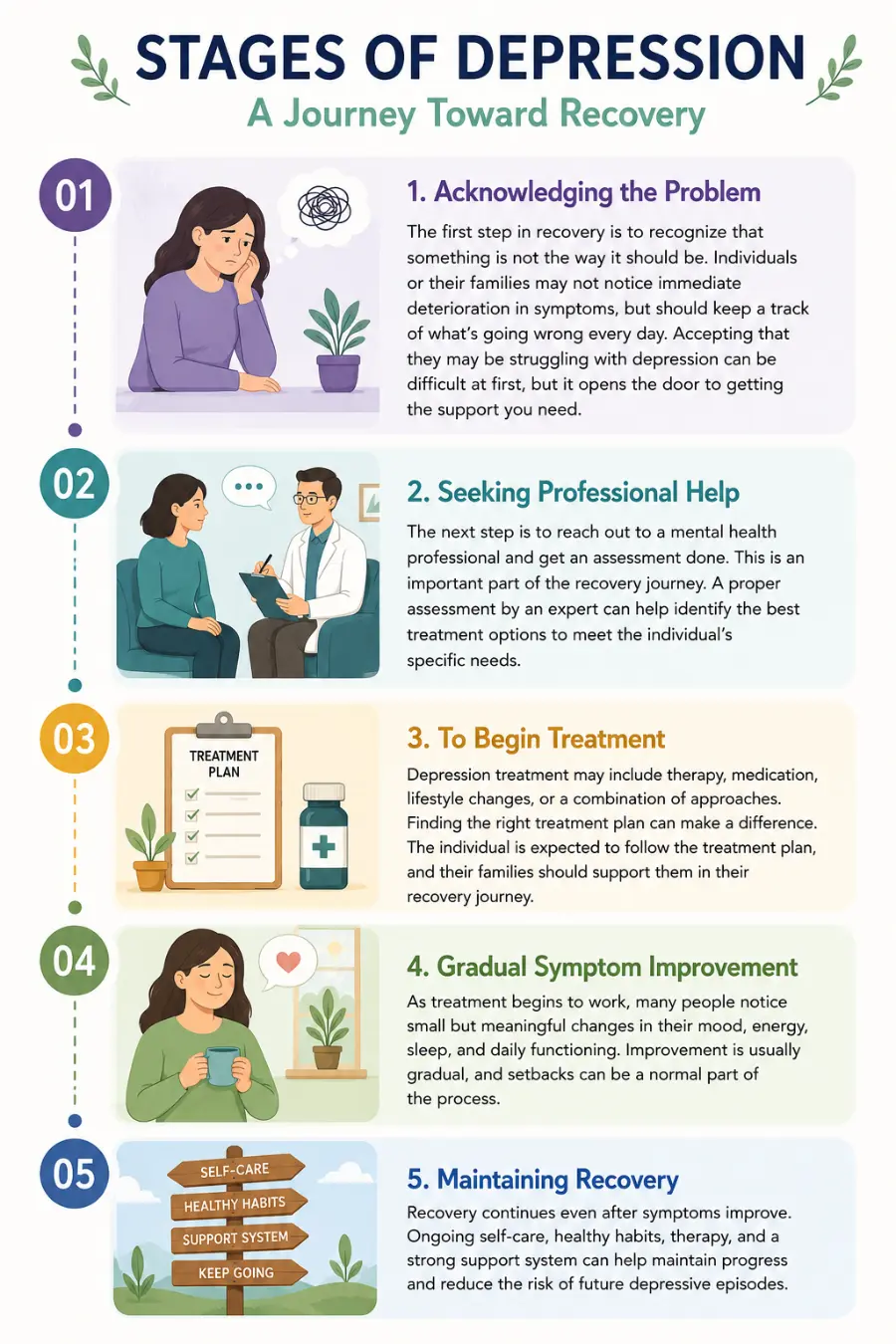
Depression recovery is not a sudden, single event. Instead, it is an ongoing, gradual process in which the individual must follow the prescribed treatment plan, attend regular therapy sessions, and make lifestyle changes to recover faster.
Recovery occurs in stages, with improvements occurring in pieces before the individual can notice significant changes in mood, physical health, and overall behavior.
Acknowledging the Problem
The first step in recovery is to recognize that something is off, or just not right. Individuals or their families may not notice immediate deterioration in symptoms, but should keep a track of changes in mood and behavior. Accepting that they may be struggling with depression can be difficult at first, but it opens the door to getting the support you need.
Seeking Professional Help
The next step is to reach out to a mental health professional and get an assessment done. This is an important part of the recovery journey. A proper assessment by an expert can help identify the best treatment options to meet the individual’s specific needs.
Beginning Treatment
Depression treatment may include therapy, medication, lifestyle changes, or a combination of approaches. Finding the right treatment plan can make a difference. The individual is expected to follow the treatment plan, and their families should support them in their recovery journey.
Gradual Symptom Improvement
As treatment begins to work, many people notice small but meaningful changes in their mood, energy, sleep, and daily functioning. Improvement is usually gradual, and setbacks can be a normal part of the process.
Maintaining Recovery
After the symptoms improve, the individual should continue ongoing self-care, build healthy habits, and attend therapy. Having a strong support system with friends and family around can also help maintain recovery. It also reduces the risk of future depressive episodes.
Signs You Are Recovering From Depression
There are some signs that help people recognize that the treatment is working and they are steadily moving towards recovery.
- Feel less tired and more energetic during the day
- Sleep becomes more restful and consistent
- Enjoying hobbies and daily activities that were once ignored
- Finding it easier to focus on daily tasks
- Experiencing fewer emotional ups and downs
- Spending time with family and friends
- The daily responsibilities feel less overwhelming
- Feeling happy and emotionally connected to others
What Can Slow Down Depression Recovery?
Recovery can become challenging, and progress may be delayed if:
- The person has other mental health challenges to deal with
- Relying on substances or alcohol to stabilize mood and feel better
- Ongoing life stress, such as unemployment, financial struggles, or relationship issues, becomes worse
- Lack of family and friends who can help during recovery.
- Treatment is incomplete, and the individual misses therapy or medication.
Can Depression Go Away on Its Own?
Yes, depression may get better, and symptoms start to diminish or completely go away in certain cases. People living with mild depressive symptoms can gradually start feeling better when the underlying situation that triggers their sad mood improves.
Since recovery is different for everyone, seeking professional help early is the best way to reduce symptoms and feel happy and hopeful about one’s recovery journey.
When Symptoms Improve Naturally
- Symptoms may ease as life situations become less stressful or more stable.
- Gradual improvements in mood, energy, and daily functioning over time occur due to family support.
- Engaging in healthy lifestyle habits, such as exercise, regular sleep, and social connection, can support natural recovery.
Risks of Avoiding Treatment
- Symptoms of depression may intensify and worsen without professional help
- Depression can affect an individual’s relationships, work, and daily life
- The person may struggle to manage difficult emotions and feel overwhelmed
- Delaying treatment can lead to seeking alcohol or substances for a quick fix
Treatment Options That Support Depression Recovery
Depression has a higher recurrence rate, which means the chances of the symptoms returning after a period of time are high. According to NIH-backed research, 70% of those with two major depressive episodes experience recurrence throughout their life.
Depression recovery treatment is a personalized approach that includes a range of evidence-based therapies. Professional depression treatment programs combine these approaches to provide comprehensive care:
Therapy
Therapy for depression includes CBT and DBT. Cognitive behavioral therapy (CBT) helps individuals identify negative thought patterns and replace them with healthier ways of thinking. DBT (Dialectical Behavior Therapy) teaches individuals effective coping skills in real life by improving their emotional regulation and stress tolerance.
Medication
Individuals are prescribed antidepressant medications that act to balance brain chemicals linked to depression. They are often most effective when combined with therapy.
Lifestyle Modifications
Individuals should engage in regular physical activity that can boost mood and reduce stress. Even short daily walks can help individuals feel better over time. Moreover, eating healthy meals and getting restful sleep can significantly reduce emotional overwhelm.
Support Groups
Individuals with depression can associate themselves with support groups where peers with similar experiences can help them heal. Peer support provides a safe space to share experiences. It also makes recovery feel lighter and less lonely.
When to Seek Professional Help
Seeking professional help is essential when:
- Symptoms become intense and last for longer durations
- An individual finds it difficult to continue work and take up responsibilities
- Social withdrawal and emotional unresponsiveness
- Persistent sadness with hopeless feelings
- Thoughts of self-harm