



-
 Written By:
Alex Herrera
Written By:
Alex Herrera
-
Edited By:
Phyllis Rodriguez, PMHNP-BC
-
Clinically Reviewed By:
Dr. Ash Bhatt, MD, MRO
 Written By:
 Edited By:
 Clinically Reviewed By:
Schizophrenia is a complex psychosis that distorts a person’s perception of reality, thought processes, and understanding of their environment. According to NIH-backed research, it has been shown that although schizophrenia symptoms carry a high genetic risk, they can also worsen if triggered by stress and trauma experienced by the individual in their daily lives.
Childhood trauma, especially emotional and sexual abuse, along with ongoing life stress, doesn’t directly cause difficulty understanding reality; instead, they can affect the onset and severity of symptoms. Recognizing this connection can lead to quicker medical intervention and improved treatment outcomes.
Key takeaways
- Stress and trauma act as triggers of schizophrenia, not as a direct causal factor
They can intensify symptoms, make them worse, and make it difficult to ensure positive treatment outcomes in people already diagnosed with schizophrenia.
- Vulnerable individuals are at risk of developing schizophrenia symptoms
Factors like genetic inheritance, exposure to conflicting or abusive family life, and lack of a support system can intensify symptoms. These factors influence how strongly symptoms are triggered and how quickly they worsen over time in people exposed to these life situations.
- Early recognition of symptoms means better treatment outcomes.
Identifying the stressors and trauma triggers that cause schizophrenia not only prevents symptoms from becoming worse, but also reduces recurring episodes.
What Is Schizophrenia?
Schizophrenia is a neuropsychiatric condition; the symptoms may persist actively or in residual states in people once diagnosed with the illness. People living with schizophrenia show marked impairment in perceptual clarity and information processing.
They experience thought distortions, and their emotions appear flat and inappropriate to the situation. Their behavior appears bizarre, and the person lives in a world with a significant loss of contact with reality.
Key Symptoms
The clinical picture of schizophrenia includes symptoms such as:
- Delusions – False beliefs that the individual holds on to, despite evidence that they are unreal. Example: family members plotting a conspiracy against them
- Hallucinations – Sensory experiences that are unreal and not triggered by immediate environmental cues. Example: hearing voices or seeing people roaming when no one is present.
- Disorganized speech and behavior: Confused thinking, unclear speech that appears meaningless to the listener.
- Emotional flattening: Minimal or no emotional expression, facial reactions are odd and inappropriate to the situation.
- Poverty of speech – Very little verbal communication with minimal or no reply when asked something.
- Anhedonia – Lack of pleasure in daily activities and showing reduced motivation to socialize and live a life completely cut off from reality.
What Are Common Triggers of Schizophrenia Symptoms?
There are various causes of schizophrenia episodes that may act as immediate triggers to intensify the symptoms.
Stress: When people with schizophrenia face emotional stress like relationship issues, money problems, or bullying, symptoms such as disorganized thinking, paranoia, and flat affect may worsen over time.
Trauma: Any kind of distressing experience, such as sexual abuse, physical assault, violence in the family, or witnessing a disaster, may intensify paranoia, anxiety, and hallucinations.
Improper Sleep: Lack of sleep can trigger false thoughts by impairing clear thinking and reducing emotional regulation. This makes it harder for the brain to distinguish reality from distorted perceptions.
Not Using Medications Appropriately: Symptoms of schizophrenia, like delusions, hallucinations, and unusual behaviors, can worsen when medication is stopped without medical supervision or is used inconsistently.
Social Isolation: With limited family and social support, schizophrenic patients may feel lonelier and become emotionally distant and unresponsive. Their delusions and hallucinations may worsen, increasing emotional distress, paranoia, and agitation.
Major Life Changes: People living with schizophrenia may not accept major life changes easily. Things like moving out of a locality, loss of employment, and relationship struggles can trigger suspiciousness, mood swings, confusion, disorganized thought, and anhedonia.
Physical illness: Sometimes, physical issues like illness or chronic pain can also cause stress and trigger symptoms of anxiety, confused thought, unpredictable actions, and mood changes.
Family conflict: Living in a dysfunctional household with hostile relationships and frequent criticism may lead to increased social withdrawal, paranoia, anxiety, and emotional distress.
How Stress Affects the Brain in Schizophrenia
Ongoing stress does more harm to schizophrenia patients than just leading to overwhelming emotions. In moments of stress, a person’s cortisol levels (a stress hormone) rise, affecting thinking, perception, and emotional regulation. Stress can also increase the risk of symptoms coming back after a period of stability.
In schizophrenia, higher cortisol means more mental agitation, incoherent thoughts, and misinterpretation of reality because of constant disruption in various brain chemicals, such as dopamine and serotonin. Since these brain chemicals are closely linked to mood, thinking, and perception, the person may exhibit behavioral changes suggesting a sense of being split off from reality.
How Trauma Contributes to Schizophrenia Symptoms
Childhood trauma and schizophrenia episodes are closely connected. Trauma-induced events such as childhood abuse, neglect, bullying, and loss of a loved one can trigger symptoms and increase their severity over time.
The individual finds it hard to manage their overwhelming feelings, either acting in bizarre ways or becoming emotionally distant and withdrawn. At this point, symptoms such as paranoia, withdrawal, confusion, or hallucinations may start to worsen.
Signs That Trauma And Stress Trigger and Intensify Schizophrenia
Schizophrenia Symptoms | How It Appears | Stress and Trauma as Schizophrenia Triggers |
| Paranoia | The individual shows heightened suspicion of others’ intentions, feeling that they are being plotted against. They may feel unsafe and hold false beliefs of danger and mistrust | Stress increases their anxiety, and trauma makes them feel unsafe, leading to mistrust and feelings of being threatened even in safe places. |
| Intense hallucinations | The individual hears voices or sees people following them, talking to them, or plotting a conspiracy against them. | Ongoing emotional overwhelm can intensify psychotic symptoms, leading to significant loss of reality. |
| Disorganized thought patterns | Racing thoughts, confused speech that is difficult to understand by others. Lack of focus and incoherent memory of recent events | High stress and past trauma can reduce focus and lead to memory lapses because of trouble remembering things properly |
| Sleep disturbances | Insomnia, daytime drowsiness, and nightmares | Trauma can bring flashbacks of past harm, and stress can intensify fear, anxiety, and nervousness, making it hard to sleep |
| Social withdrawal | Emotionally distance from friends and family, preferring a solitary life with reduced emotional responsiveness | Fear, mistrust, and emotional isolation triggered by stress and trauma make it hard to maintain relationships |
| Mood changes | Irritability, anger, sadness, or blunt affect | Stress and trauma can make the person restless, leading to a loss of ability to show appropriate emotions according to the situation |
| Loss of motivation | Lacks personal hygiene, poor self-care; they may look shabby, behave unusually, and lack interest in carrying on daily activities | Emotional burden may lower energy and motivation to carry on what’s essential. Complete loss of reality makes it harder to comprehend daily life situations clearly |
| Recurrence of symptoms | Risk is high unless treated effectively | When Stress and trauma are not resolved properly, symptoms persist in a latent state and may flare up quickly |
How Stress and Trauma Worsen Existing Symptoms?
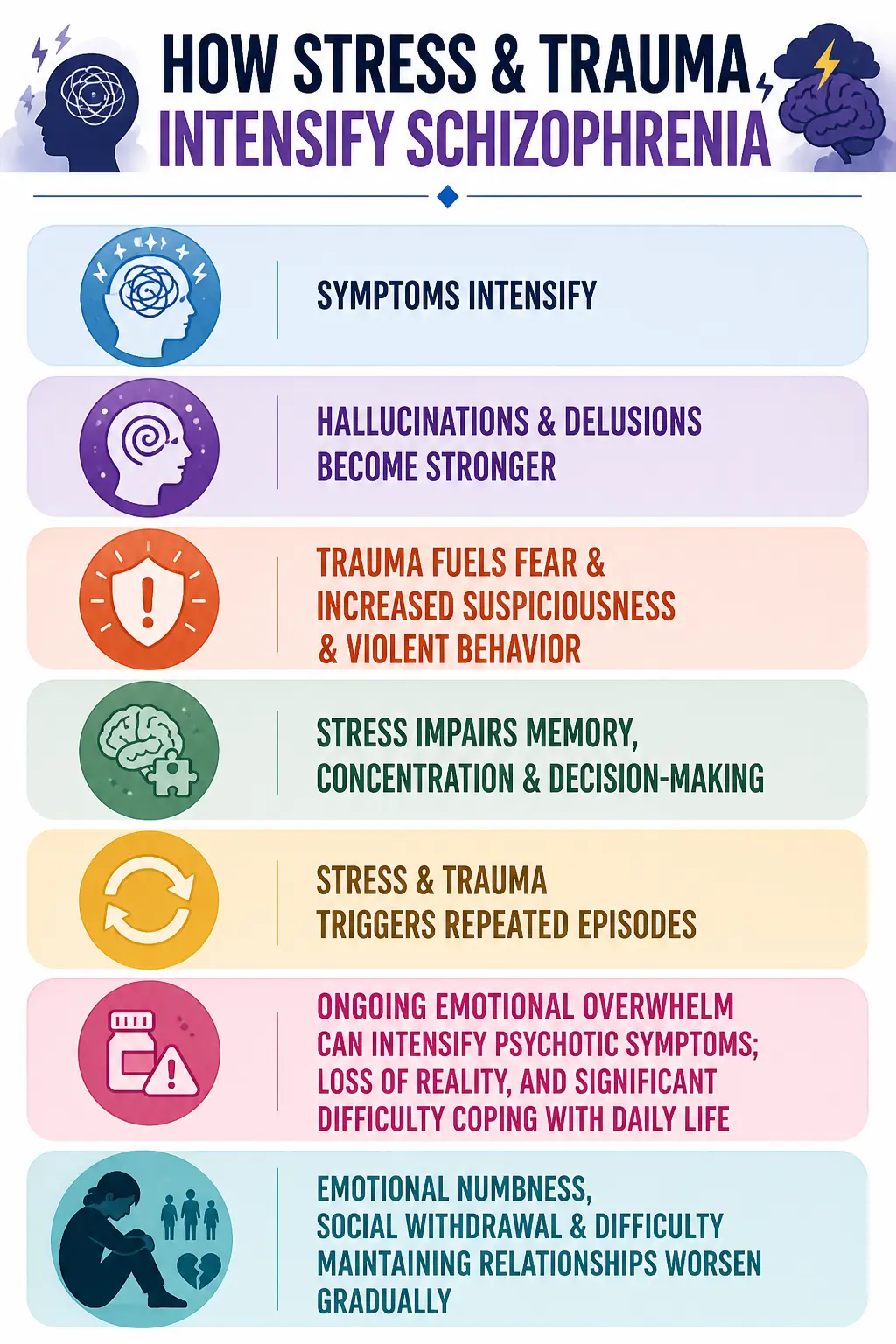
When people living with schizophrenia get exposed to stress and trauma, their symptoms may intensify, leading to frequent episodes of the disorder showing up in daily life.
- Hallucinations and delusions may become more pronounced, making it harder to control.
- Trauma may lead to fear, increased suspiciousness, and violent behavior.
- Stress can influence their memory, concentration, and decision-making.
- Unresolved stress and trauma can trigger repeated return of symptoms.
- Ongoing emotional distress and loss of reality may lead to less effective treatment outcomes.
- Emotional numbness, social withdrawal, and difficulty maintaining relationships may worsen gradually.
Schizophrenia Treatment Options
A personalized treatment plan that includes medication, therapy, and holistic care works best for individuals living with schizophrenia.
Medication: Schizophrenia medication involves managing symptoms like hallucinations, delusions, and other related issues. Medications can lower the risk of recurrence and future episodes.
Therapy: For schizophrenia patients, therapy targets their distorted thoughts and helps them develop healthier thinking patterns, improve emotional regulation, and build healthier coping skills to deal with trauma and stress. Individuals may take therapy sessions in an outpatient setting if their symptoms are manageable and their mental health professional decides on a flexible treatment plan.
Inpatient schizophrenic treatment: This approach offers intensive care for people who need continuous monitoring because of severe symptoms. They may act erratically at home, exhibit self-harming tendencies, or display violence toward others. Inpatient care provides 24/7 monitoring, structured treatment plans in a residential mental health treatment center that include ongoing therapy focused on stabilization and lasting change.
Support systems: Friends and family members may play a crucial role in the treatment of schizophrenia in their loved one. They should help the individual stay consistent with treatment, offer emotional support, reduce isolation, and create a warm, supportive home environment.
Stress management tools: Simple daily habits can reduce stress, improve emotional regulation, and reduce the triggers that intensify schizophrenia symptoms. The individual should maintain consistent daily routines, engage in relaxation and mindfulness exercises to reduce mental pressure, and stay calm.
When To Seek Professional Help
If your loved one is experiencing schizophrenia symptoms, it is important to seek professional medical support if:
- Symptoms intensify and continue for longer durations
- hallucinations and delusions are intense
- Increased paranoia, fear, and mental agitation
- Social withdrawal or suicidal ideation
- Violent behavior
- Bizarre speech and lack of decision-making